
Sustainable Building Melbourne:
Practical Steps That Work
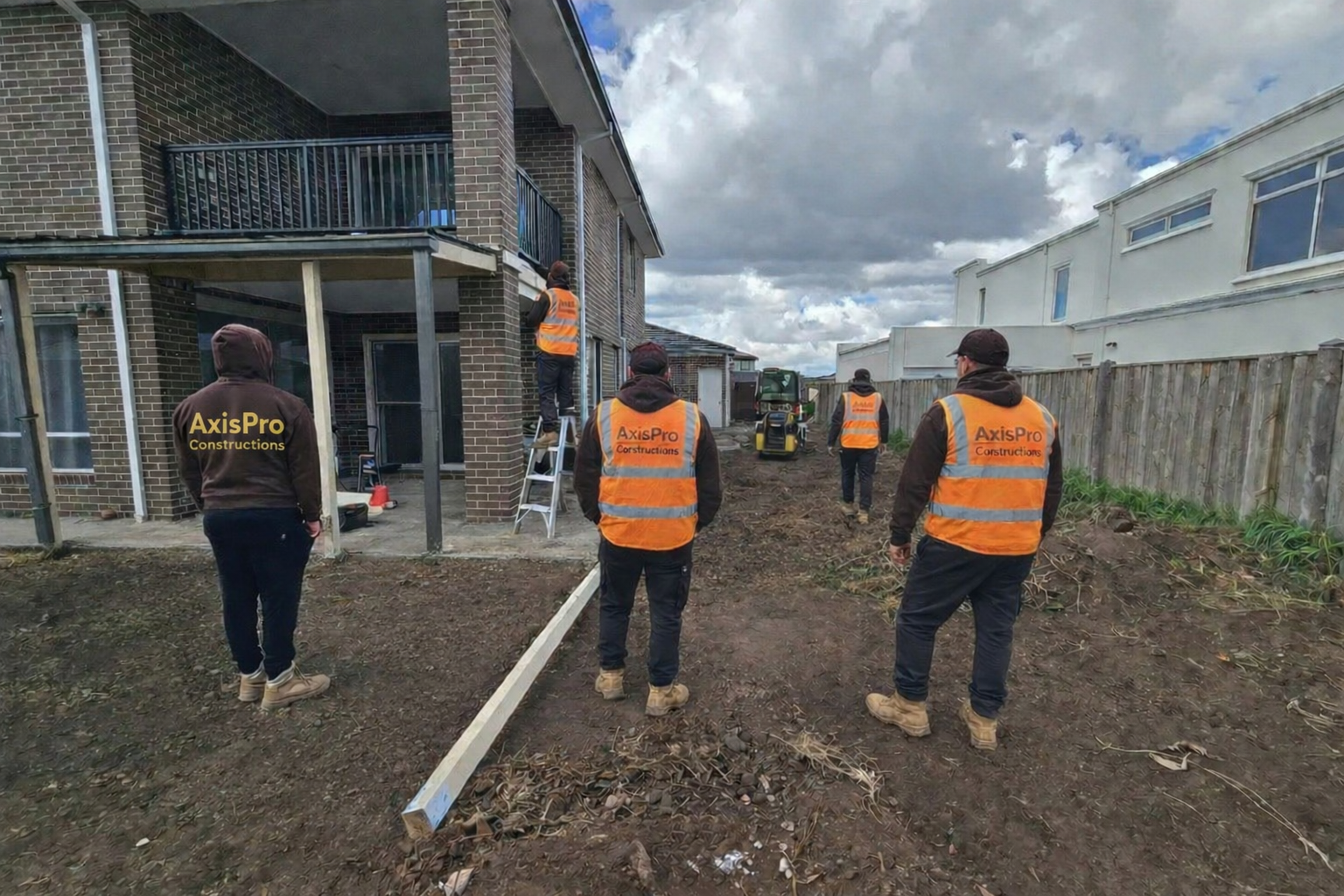
Every builder in Melbourne claims to be sustainable. Very few can tell you specifically what that means on their sites. Sustainable building isn't a marketing position — it's a series of deliberate decisions made at every project stage, from design to demolition waste.
Here's what it actually looks like in practice.
Reducing Material Waste on Site
Construction waste accounts for roughly 40% of Australia's total waste stream. Most of it comes from poor planning and over-ordering — not from unavoidable offcuts.
At AxisPro, we use PlanSwift and Bluebeam for precise material take-offs. On a recent residential project, this approach reduced timber waste by approximately 18% compared to industry averages. Accurate estimation is the most practical sustainable construction material Australia habit a builder can have.
Upgraded Framing for Better Thermal Performance
Standard residential framing uses 90x45mm timber. We regularly specify 140x45mm framing — not because it's trendy, but because the wider cavity accommodates thicker insulation batts. The result is measurably better thermal performance and acoustic separation between rooms.
This single upgrade contributes more to NatHERS rating outcomes than most cosmetic green features. It costs more upfront and saves materially over the life of the building.
Passive Design Integration
In our Design & Construct projects, we work with architects at the brief stage to optimise building orientation, window placement, and external shading. These decisions cost almost nothing to incorporate at design stage — and deliver significant energy savings over decades.
On a sustainable home builder Melbourne project, passive design should be the first conversation — not an afterthought when the plans are nearly complete.
Smart Material Selection
We prioritise locally sourced materials where supply chains allow, reducing transport emissions. We also recommend products with demonstrated longevity — because a material that lasts 40 years without replacement is more sustainable than a cheaper alternative replaced every 15.
Green building practices Australia-wide are moving toward a lifecycle view of materials. We apply the same lens on every project.
Water Management
On residential projects, we recommend rainwater harvesting systems and water-efficient fixtures as standard inclusions. On commercial projects, stormwater management systems are designed to meet or exceed minimum council requirements — not just comply.
The Business Case
Sustainable building Melbourne projects aren't just ethically sound — they're financially rational. Energy-efficient buildings command higher resale values. Lower operating costs matter to tenants and owner-occupiers alike. And increasingly, sustainable credentials influence whether commercial clients can achieve their own ESG reporting targets.
FAQ
Does sustainable building cost significantly more?
Some elements carry a modest upfront premium — upgraded framing, better insulation, passive design features. Most are recovered within 5–7 years through reduced energy costs. Accurate take-offs actually reduce construction costs.
What is a NatHERS rating and do I need one?
The Nationwide House Energy Rating Scheme measures a home's thermal performance. New residential builds in Victoria must achieve a minimum 7-star NatHERS rating. AxisPro designs to this standard as a baseline.
Can I retrofit sustainable features into an existing home?
Yes — insulation upgrades, window glazing, and HVAC replacement are common retrofit measures. We can advise on which improvements deliver the best return for your specific property.
Build Sustainably
Sustainability doesn't require compromise. Talk to AxisPro about how practical green building decisions can be built into your next project from the start.
Start the Conversation